Monday to Friday 8:30 – 16:30
 08 5106 7444Monday to Friday 8:30 – 16:3008 5106 7444Mon – Fri 8:30 – 16:3008 5106 7444
Embrace Healthcare Solutions is a NDIS-approved disability support provider delivering care and support services across Regional Western Australia.


From cleaning, travel and transport, respite care and wellbeing to activities of daily living. Discover a wide range of NDIS-approved disability support services offered by Embrace Healthcare.

We see you as a person with talents, skills, passion, and life goals. Through capacity building supports we help you explore your the full potential and achieve tangible goals on your way to independent living.

We believe in creating a world where everyone, regardless of their abilities or circumstances, has the opportunity to engage, contribute, and thrive in their community. Explore how we can assist.
For many people, the world of NDIS can feel a bit overwhelming and confusing. We are to help you navigate through the entire process. From application to service selection and beyond, we are here to support you with care.
Healthcare Solutions is serving communities living in regional Western Australia.
Regional areas we serve
Karratha | Roebourne |Port + South Hedland |Newman
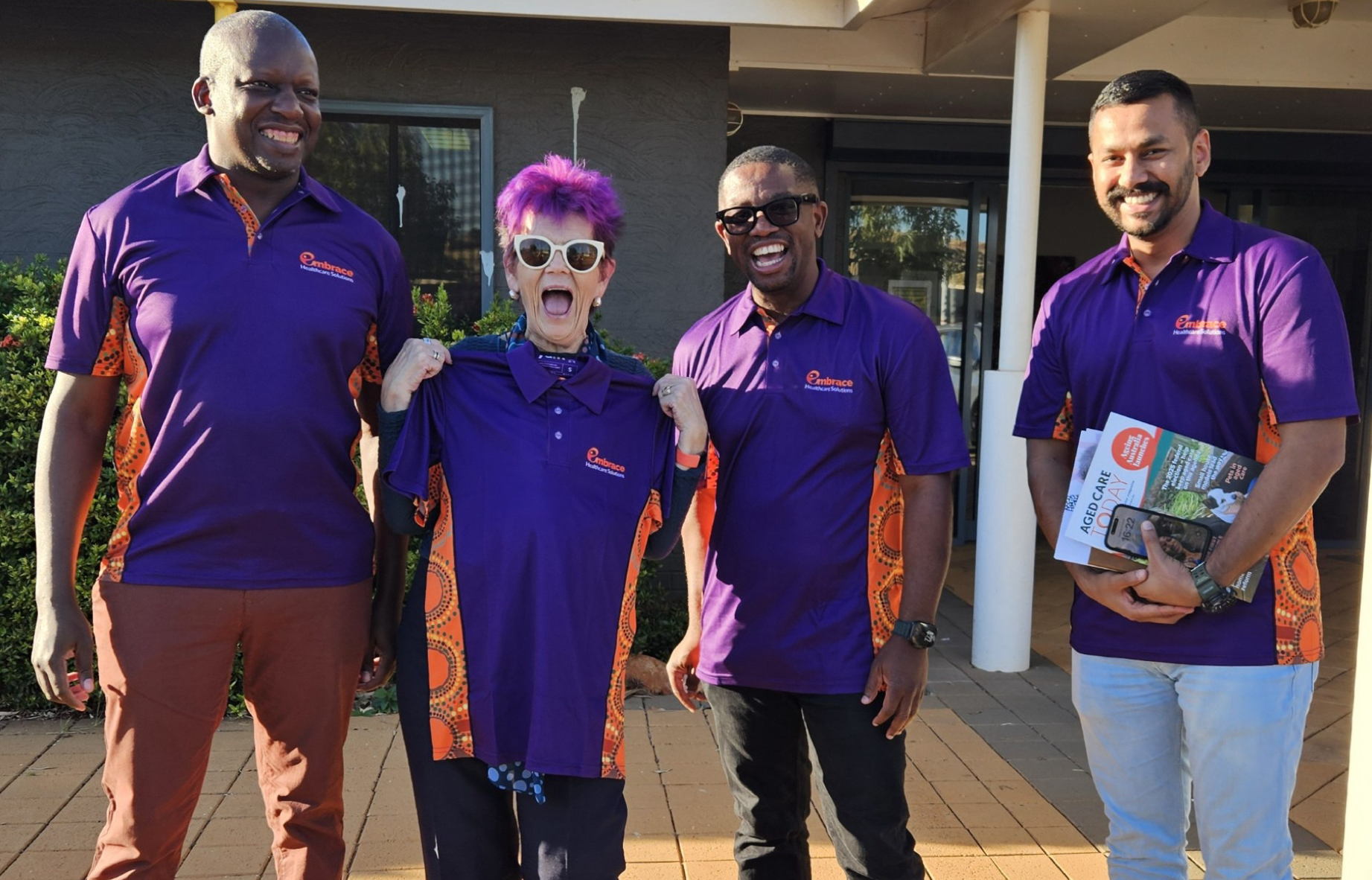
Recently, Embrace Healthcare Solutions had the privilege of participating in the Aged Care Workforce Strategy Summit in Karratha, jointly hosted by Regional Development Australia and Ageing Australia. It was more than a professional event. It became a meaningful opportunity to reflect, to connect, and to share where we are heading, that is, towards a future where aged care is compassionate, community led, and grounded in trust.
The summit unfolded over two thoughtful and purpose filled days. On the first day, we gathered with sector leaders, frontline workers, policymakers, and educators to explore some of the most pressing challenges in aged care. Together, we discussed how to strengthen recruitment, improve retention, support training, and protect the wellbeing of staff. These were not just formal discussions, but honest conversations shaped by lived experience and shared purpose.
The second day centred around the people who matter most, our elders. We were honoured to take part in the Seniors Afternoon Tea and Information Session, themed “Your Care, Your Community.” This session featured talks on accessing local health services, allied health, home support, and advanced care planning through ELDAC. But beyond the information shared, it was the personal connections that truly stood out. We spoke directly with seniors from across the region, listened to their hopes, and answered their thoughtful questions.
During the afternoon, Embrace announced our new partnership with Trilogy Care. From 1 July 2025, we began offering services under the Aged Care Support at Home funding. We also shared our intention to expand into Commonwealth Home Support Programme delivery within the next twelve months. The response from the community was warm and encouraging. Many were already familiar with our work under the Palliative Care funding through WACHS Pilbara, and welcomed the news of our continued presence in aged care.
One of the lighter moments came from Liz Behjat, Western Australia and Northern Territory Manager at Ageing Australia, who opened the summit with a smile and a comment about wanting an Embrace shirt to match her hair colour. At the end of the event, we gifted her one. It was a simple gesture, but one that captured the spirit of the summit: friendly, generous, and people focused.
Since our aged care services commenced on 1 July, we have experienced a significant rise in enquiries. This has reaffirmed what we have long known that people in the Pilbara want aged care that is personal, accessible, and delivered with integrity.
We are also an official member of Ageing Australia and this marks another step in our commitment to listening, learning, and growing in partnership with others who care deeply about this work.
At Embrace, we believe aged care is not simply a service, it is a relationship. It is about showing up, staying present, and walking alongside those who have spent their lives giving to others. It is our privilege to now care for them.
And in Karratha, this is only the beginning.
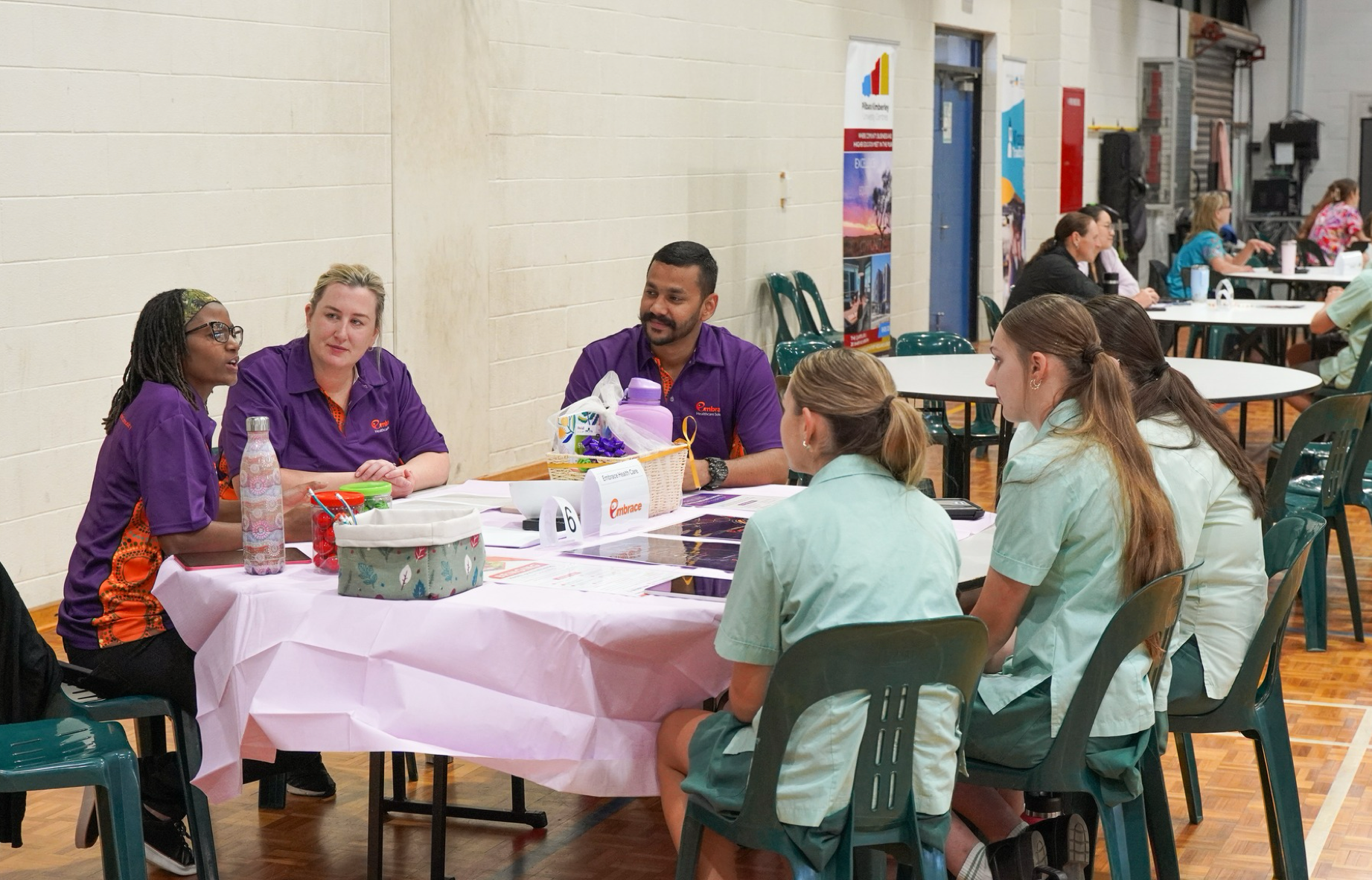
In June, the team from Embrace Healthcare Solutions had the pleasure of attending the Year 10 Speed Careering Conversations at St Luke’s College in Karratha. It was a lively and inspiring event that brought together over 25 employers from across the Pilbara, offering students a meaningful opportunity to explore future career paths in a supportive and engaging setting.
The event was designed to help students consider the five career pathways offered at St Luke’s College. From the moment it began, the room was filled with energy as students eagerly moved between tables, engaging with professionals from a wide range of industries including mining, corporate services, trades, health, and community care.
Representing the care sector, our team from Embrace was delighted to see such a strong interest in what we do. Many students admitted they had not thought much about careers in healthcare or disability support before, but that quickly changed once the conversations started. We brought along our “Care to Guess?” quiz and a few small gifts, which turned out to be a real hit. Teachers even told us that our table was the most colourful and the most engaged on the day.
As students stepped up to our table, they asked insightful questions about the roles available in our field. They were curious about support work, administration, and how we assess someone’s level of disability. Several students wanted to understand how the NDIS works, what qualifications are needed, and what a typical day might look like for someone in a caring profession.
It was a pleasure to be able to break down some of those big ideas into conversations that made sense to young people who are just beginning to explore their future. There was a genuine sense of curiosity, and in some cases, a spark of inspiration. We could see students starting to imagine themselves in roles that are centred on helping others and making a real difference in their communities.
We are grateful to the staff and organisers at St Luke’s College for inviting us to be part of such a valuable initiative. Events like these are more than just career expos. They are spaces where students can ask questions, connect with professionals, and discover possibilities they may not have considered before.
At Embrace, we believe that care is not just a career, it is a contribution. And it was a privilege to share that message with the students of Karratha.
Credits: St Luke’s College Karratha for granting us permission to use the cover image.

As petrol prices keep rising, it’s more expensive than ever to get around. Maybe you need a lift to the shops and back, or perhaps you have appointments to get to. And many of us need to ride long distances to access services. The Pilbarra is huge and the kilometres can really add up, which can be a burden on finances.
So welcome to our second installment of our Money Series, where we take a close look at ways you can save money and still enjoy life during this worldwide financial crisis. Whether you’re a patient who needs a long ride to get to specialist treatment, or a person who requires extra mobility support, check out our top tips for getting from A to B for less.
NDIS Transport Funding: When there’s no option to use public transport, or if a participant is unable to travel independently, NDIS participants may be eligible for transport funding. This includes private cars, taxis and ridesharing. To check if you are eligible visit here.
Patient Assisted Travel Scheme (PATS): For residents needing to travel long distances for specialist medical services not available locally, PATS provides financial subsidies to offset travel and accommodation costs. For more info, see here.
Companion Card WA: The Companion Card Program supports Western Australians with a significant and permanent disability who require attendant care support to participate at community venues and events. Companion Cardholders show their card when booking or purchasing a ticket from a participating business, called an Affiliate. Affiliates will recognise the Companion Card and issue the cardholder with a second ticket for their companion at no charge. Check if you’re eligible here.
TransWA Concession Fares: If you’re a concession card holder, you are entitled to concession fares and limited free travel on Transwa services. To know more, see here.
Passenger Transport Subsidy Scheme (PTSS): The PTSS is a subsidy available to eligible people with disability travelling in on-demand rank or hail (taxi) vehicles. PTSS participants can receive up to 75% off eligible taxi fares. The PTSS replaces the TUSS (Taxi User Subsidy Scheme). To see if you’re eligible click here.
Regional Pensioner Travel Card: The Travel Card supports eligible country pensioners with travel costs to access government services to enhance their quality of life. This card provides eligible pensioners with up to $675 a year towards the cost of fuel and/or taxi travel from participating providers, offering more support for the transport needs of pensioners living in regional areas. For more information, see here.
Carpooling: And lastly, why not hop in for a ride with others, and you can all keep the costs down? There are ridesharing apps available, or simply use social media such as a Facebook local group to organise a trip together. And the best part about this is that you can get to know new people while cutting down on petrol money.
Have a tip you’d like to share? We’d love to hear it! Leave a comment on our fb page and we’ll look into it straight away.

Let’s be honest—hospitals are great when you need them, but nobody dreams of spending more time there than absolutely necessary. That’s where community nursing steps in! It brings top-notch healthcare straight to where you feel most comfortable—your home, local clinic, or residential care home.
At Embrace Healthcare Solutions, we provide NDIS-funded community nursing services to individuals with disabilities, ensuring they receive the care they need without the stress of hospital visits. Whether it’s managing long-term conditions, assisting with personal care, or helping with recovery after a hospital stay, community nursing empowers people to live healthier, more independent lives.
Why Community Nursing is a game-changer for people with disabilities
1. Hospital-level care without the hospital feel
Imagine getting professional medical care in your own home, without the beeping machines and sterile smells of a hospital. Sounds great, right?
Community nurses are highly trained professionals who assess individual needs and provide tailored support—whether it’s wound care, chronic condition management, or everyday personal assistance.
Plus, having a dedicated nurse check in on you regularly means better communication between you and your medical team, reducing unnecessary hospital visits.
2. Holistic Care – More than just bandages and check-ups
Community nurses don’t just tick off a checklist and leave rather they take a holistic approach, addressing both medical and personal needs.
They assist with:
✅ Medication management (so you never miss a dose!)
✅ Wound care and treatment plans
✅ Personal care assistance
✅ Respiratory and stoma management
✅ Overnight nursing support
The best part? Everything is tailored to you. Whether you need moderate, intensive, or primary care, community nurses adapt to what works best for your lifestyle.
3. Smoother recovery after a hospital stay
Hospitals are great for treatment, but getting back to normal life can be tricky—especially if you have complex care needs. That’s where community nursing steps in.
If you’ve just had surgery or a hospital stay, community nurses help ease the transition by:
✅ Developing treatment plans in coordination with doctors
✅ Monitoring progress and spotting any issues early
✅ Providing ongoing support to speed up recovery
For those with long-term conditions, community nurses fill the gap between hospital care and daily life, ensuring consistent, high-quality support.
4. It’s all about independence
Let’s get one thing straight—community nursing isn’t just about helping you get better; it’s about helping you live better.
Nurses focus on empowering individuals to be as self-sufficient as possible. Whether that means:
💡 Teaching self-care techniques
💡 Encouraging mobility and rehabilitation
💡 Adjusting care plans to promote independence
The goal? To equip you with the tools, confidence, and support to live life your way.
5. Saving money while staying healthy
Did you know community nursing helps cut down healthcare costs?
By providing preventative care, nurses reduce the risk of hospital admissions and expensive treatments. They also:
💰 Educate patients on managing their conditions
💰 Help prevent complications
💰 Provide at-home treatments that keep costs down
For families, this means less financial strain and more peace of mind knowing that loved ones are well cared for.
6. Trust and personalised support
Wouldn’t it be great if your nurse knew you personally, rather than treating you like just another appointment? With community nursing, trust and familiarity are built over time. Regular visits mean nurses understand your preferences, routines, and concerns, making care more personalised and effective.
And let’s be real – when you feel comfortable with your healthcare provider, you’re more likely to speak up about what you need, leading to better outcomes.
Final Thoughts: the heart of community healthcare
At Embrace Healthcare Solutions, we believe quality healthcare should fit around your life—not the other way around. Community nursing allows people with disabilities to receive top-tier medical support without compromising their independence.
From personal care to complex medical needs, our nurses provide compassionate, professional, and tailored support to help you or your loved ones live life to the fullest.
Want to learn more about how community nursing could help you? Visit our website or give us a call—we’d love to chat!

A cyclone warning has just been put in place for our area, and it’s time to dust off your supplies and get prepared for the next few days. You may be aware of what you need in your basic kit, such as a torch, water and fresh batteries. You probably know to fill your car with petrol, to tape down your windows and to bring in any furniture from outside the home. If you’re looking for a quick reminder and a basic cyclone-ready checklist, click here.
But for someone with a disability, things can be a bit more tricky around cyclone season. You may have special needs that won’t be found on any official checklist, such as an extra supply of catheters, or a plan for evacuating using a wheelchair. You may be feeling anxious about how you’ll cope if a cyclone hits, or be worried if you’ll be able to contact people in an emergency.
Some good planning and some extra stockpiling could make all the difference to your health and wellbeing, if a cyclone does hit. Here at Embrace we support all our clients to be prepared for natural disasters, including cyclones. We are creating a planning tool to help you choose what suits you best, and can be tailored to your unique needs and abilities. As soon as our planning tool is up and functional, we’ll let you know. But for now, read on to get cyclone ready.
You’re probably aware that the WA government has changed their cyclone warning system. Gone are the colour-coded alerts: they’ve been replaced with “Advice”, “Watch and Act” and “Emergency Warning”.
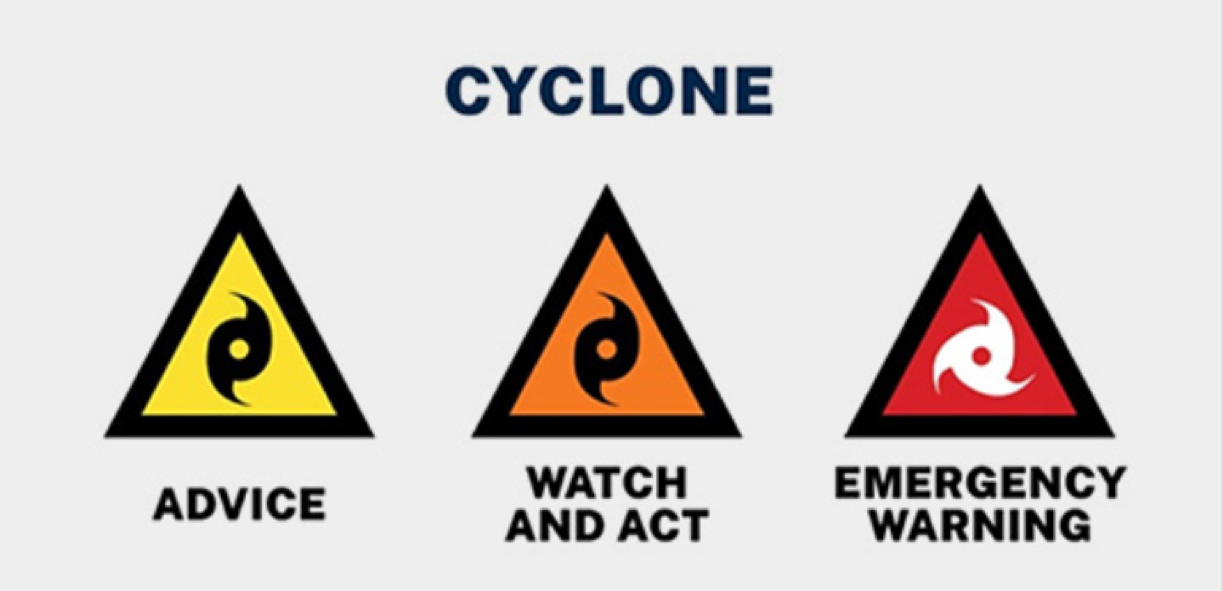
Part of being cyclone-ready is knowing what these three new levels mean, and how they impact you. As a basic guide, “Advice” is about listening out for information about a cyclone that is forecast, and preparing things like your emergency kit; “Watch and Act” is for putting your cyclone plan into place because the cyclone is coming soon; and the “Emergency Warning” is for when the cyclone has hit and you need to take shelter. For more info on the new alert system, visit https://www.dfes.wa.gov.au/hazard-information/cyclone/prepare?tab=local
Before the cyclone hits is your time to prepare all those last-minute things on your list, such as double-checking your kit, getting online to the Emergency WA website, bringing any pets inside, and making sure you have some cash in your wallet. Now is also the time to be preparing for any special needs you may have, such as requiring electricity to run a vital piece of equipment, or having enough food for a guide dog, or making sure you have enough medicine or pharmacy supplies like incontinence pads. It’s a great time to go over your personalised checklist and tick off each item. This will help you feel prepared physically as well as mentally and emotionally.
If you have been told to evacuate, this is time to use your checklist to grab everything you will need to stay a few nights in a shelter. You may need to stay in emergency accommodation for several weeks afterwards, so you’ll need to pack for this too. If you are evacuating, there’s some things you won’t need to take, such as drinking water, but you’ll need to make room in your bag for any items which won’t be readily available in a typical shelter, such as your ventilator or strapping for a limb.
If you know the cyclone is just about to hit, now is the time to turn off the electricity mains, gas and water if you’ve been advised to.

Once the Emergency WA website has issued a red “Emergency Warning” it will be too late to leave your home. You will need to choose the strongest part of your house to stay in, so keeping away from doors and windows is advised. Have your emergency kit close by, including any medicines and generators you may need. It’s now time to break out your stash of treats (we love chocolate here at Embrace!), turn the radio on if you can, and be patient while the storm passes.
You may hear a lot of howling noises, and might witness glass shattering or other loud, dangerous things happening. There will be a lot of rain, wind and clattering sounds that you might not have heard before. If loud noises affect you, now is the time to put some earplugs in or some noise-canceling headphones on. Many cyclone survivors report that the howling noise of the wind made them feel extra anxious, so try to remember that these noises are a normal part of the cyclone and that they will pass eventually.

Once you start to hear more rain than wind again, you’re most likely on the other side of cyclone, so now is a good time to check in with the radio and/or the Emergency WA website to track how the cyclone is moving. Do not open any doors until you know it is safe to do so. The website will outline what damage has occurred outside, and whether you need to take extra precautions when leaving your home. It could still be dangerous outside with things such as powerlines down, trees fallen or flooding occurring, so you really must check with official sources before leaving your home.
If you’re wheelchair bound or find walking challenging, it might still be dangerous to leave the home, even after it has been deemed “safe” to go outside: the ground may be uneven, or your usual routes may be closed. It’s best to call someone to double check your area for you, and if you have trouble getting a friend or family member to help you can always call us here at Embrace.
Now is the time to have a plan ready. If this is your first cyclone, part of being prepared might be to do some extra research on what to expect during a cyclone. A great resource is this page which has photos and info about what may happen.
Think about your unique circumstances. If you live in a free-standing house, you’ll need to bring in furniture and anything else that could fly about: these items can smash into windows or roofs. Ask a friend or neighbour to assist you if need be. If you’re in an apartment you’ll still need to tape down your windows and have water ready. Again, a neighbour might be happy to help if you need it. If you live with pets you’ll need to arrange food and water for them, or get someone to do it for you. If you are living alone now is the time to check in with family and friends and discuss your cyclone plan with them. If you need medical equipment, get it ready and have a stock of supplies in case the shops are closed for a while.
You don’t need to be alone: ask a neighbour, friend or family member to stay with you during the cyclone. And as soon as it’s safe to do so, Embrace carers can visit and assess your needs. We’re here to help!